The Herschel Telescopes
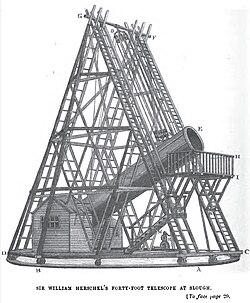
William and Caroline Herschel’s exploration of the heavens depended on instruments made through painstaking work at home, as described in Christina Koning’s Variable Stars. William designed and built reflecting telescopes, assisted by Caroline and their brother Alexander, grinding and polishing metal mirrors to gather the faint light of distant stars and nebulae. Their house in Bath became a workshop as well as an observatory, and it was with a telescope of his own making that William discovered Uranus in 1781. Caroline helped with mirror-making and recorded William’s observations, while also using smaller telescopes he built for her to conduct her own searches for comets. Their most spectacular instrument, completed at Slough in 1789 with royal funding, was the enormous forty-foot telescope, then the largest in the world. Its unwieldy size made it difficult to use, but it embodied the ambition of a family whose craftsmanship had become inseparable from astronomical discovery.